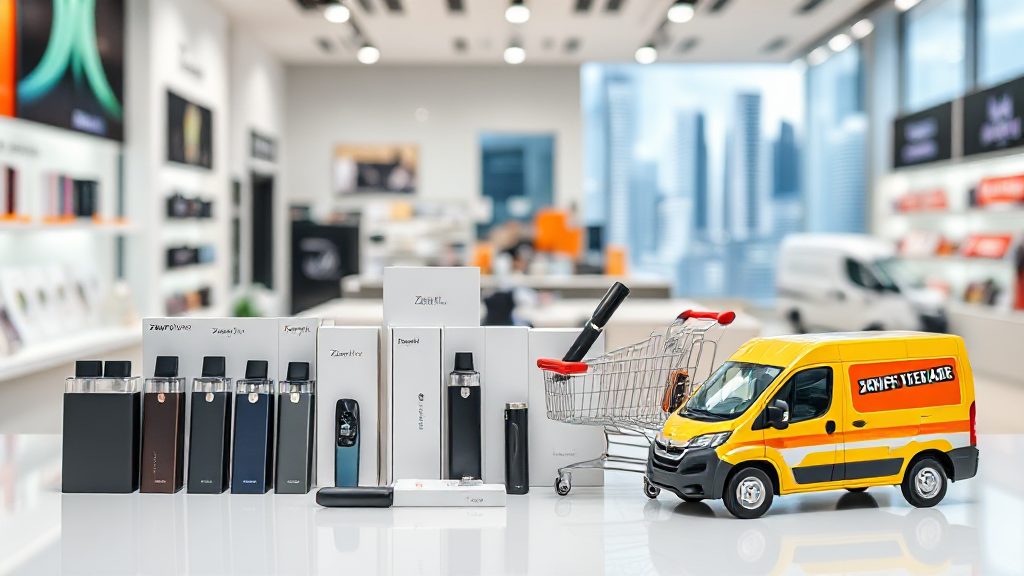
Reordering the Lana Ultra 2: Timing Repeat Buys in Singapore
October 14, 2026Reordering the Lana Ultra 2: Timing Repeat Buys in Singapore
It usually happens on a Tuesday evening, somewhere between finishing dinner and settling in for the night. The draw gets weaker, the flavour turns slightly flat, and the little light on the device starts doing that slow blink that means one thing: the clock on the next order has officially started. For anyone who has settled into a routine with a single device, this is not a moment of panic. It is a moment of logistics. If you have been buying the same setup for months, you already know roughly how many days a unit lasts, and you already know that the real skill is not choosing a device — it is timing the reorder so the new one arrives before the old one dies.
This is the rhythm a lot of regular customers in Singapore have quietly built around the lana pix family of devices. Once you stop experimenting and commit to one model, the whole experience changes. You stop browsing for novelty and start planning around delivery windows, payday cycles, and how often you actually leave the house. The result is a repeat-buying calendar that feels less like shopping and more like restocking the pantry.
Why One Device Beats a Rotation
The first stage of the repeat-buying habit is the decision to stop rotating. Early on, most people try a handful of different disposables, chasing flavour, draw feel, or puff count. That phase is useful, but it is also expensive and slightly chaotic, because every new device resets your sense of how long a unit lasts. You cannot build a reliable reorder cycle when the variable keeps changing.
Settling on one model — for a lot of buyers, the lana ultra 2 — solves that problem. Once the device is fixed, the only variables left are how heavily you use it and how quickly you can get a replacement. That is a much simpler equation. You learn that a unit lasts roughly a certain number of days, you learn how many days you are comfortable running on empty, and you learn how far ahead you need to order to avoid that uncomfortable gap.
There is also a practical benefit that has nothing to do with the device itself. When you buy the same thing repeatedly, you stop making decisions. You know the price, you know the packaging, you know what arrives. The mental load drops, and the whole process becomes a quick transaction rather than a research project.
The Two-Week Warning Window
Most repeat buyers eventually land on a warning window rather than a fixed reorder date. Instead of ordering on the same day every month, they watch for the first sign that the current device is entering its final stretch and then place the order. For a lot of people, that window opens about two weeks before the device is likely to run out.
Two weeks is not an arbitrary number. It is roughly the buffer that covers the realistic range of delivery times in Singapore, plus a couple of days for the unpredictable — a missed courier, a busy weekend, a public holiday. Ordering inside that window means the replacement usually arrives while the old device still has a few days left, which removes the stress entirely.
This is also where cash on delivery becomes genuinely useful for repeat buyers. Paying when the package arrives means you do not need to pre-load a card or worry about a payment failing at the wrong moment. You order when the warning window opens, you pay when it lands, and the cycle resets. If you have already tried a few devices and want to compare options before committing to a long-term model, browsing a range like the marbo vape 25k alongside your usual pick can help you confirm that you have actually chosen the right one for your usage pattern.
Building a Reorder Calendar That Survives Real Life
A reorder calendar only works if it accounts for the weeks when life does not cooperate. Payday cycles matter. Travel matters. Busy work periods matter, because usage often goes up when stress goes up. The trick is to build the calendar around the worst-case week, not the average one.
One approach that works well is to anchor the reorder to a recurring event rather than a date. Some buyers order when they notice the halfway point of a device. Others order on the first weekend of the month. Others order whenever they place their other recurring online purchases, so the vape restock rides along with everything else. The anchor does not matter as much as the consistency.
It also helps to keep a small buffer. If you know a unit lasts about three weeks, ordering at the two-week mark gives you roughly a week of slack. That slack is what absorbs the bad weeks. Without it, every small delay turns into a genuine shortage.
For buyers who like to keep a second option on hand — a lighter device for travel, or a different format for variety — the same logic applies. A compact backup like the lana pen plus 9k can sit unused for weeks and still be there when the main device runs out earlier than expected. The point is not to hoard. The point is to make the buffer real rather than theoretical.
Choosing the Right Restock Quantity
Once the timing is sorted, the next question is how many units to buy at once. This is where repeat buyers tend to split into two camps. Some order one at a time, treating each purchase as a small, frequent transaction. Others order two or three at once and then forget about reordering for a couple of months.
Single-unit ordering keeps spending predictable and avoids clutter, but it means you are always inside the warning window, which can feel slightly tight. Multi-unit ordering reduces the number of transactions and often feels more relaxed, but it requires you to be honest about how much you actually use. If you buy three units and then change devices halfway through, the remaining stock becomes dead weight.
A middle path works for a lot of people: order two units, keep one in use and one in reserve, and reorder when the reserve gets opened. This creates a natural, self-correcting cycle. The moment you break the seal on the spare, you know the clock has restarted, and you have the full delivery window to place the next order. It is simple, and it removes almost all of the guesswork.
If you are still comparing puff counts before locking in a quantity, it can help to look at how different capacities fit your usage. A larger unit such as the lana pix 20k changes the maths, because a higher capacity stretches the interval between orders. That longer interval is convenient, but it also means the warning window arrives less often, so you have to be more deliberate about watching for it.
What Repeat Buyers Learn After a Few Cycles
After three or four cycles, most repeat buyers develop a set of personal rules that no general guide could give them. They know their real daily usage, not their estimated usage. They know which weeks are heavy and which are light. They know how long delivery actually takes to their address, not how long it takes on average. And they know exactly how uncomfortable it feels to run out, which is usually the thing that keeps the calendar honest.
They also learn to keep an eye on alternatives without abandoning their main device. Curiosity does not disappear just because you have settled on a routine. A buyer who normally reorders the same model might still check what else is available — a different capacity like the marbo 25k, or a completely different format such as the snowwolf 16k — not because they plan to switch, but because it is useful to know what the options are if supply or preference changes.
Some also keep a secondary category in mind. Buyers who use both disposable devices and heated tobacco products often restock them on the same schedule, which is why a search for terea singapore sometimes shows up alongside disposable vape searches. Combining restocks into one order is efficient, and it means one delivery window instead of two.
The final lesson is the least glamorous one: the reorder rhythm is not about the device at all. It is about removing the small, recurring friction of running out. Once that friction is gone, the device becomes background infrastructure, and the cycle runs quietly in the background. That is the whole point of a good restocking habit.
FAQ: Timing Your Reorder
How far in advance should I reorder?
For most repeat buyers in Singapore, ordering about two weeks before the current device is likely to run out is a comfortable buffer. That window covers normal delivery times plus a small margin for weekends, holidays, and unexpected delays. If your device typically lasts three weeks, ordering at the two-week mark gives you roughly a week of slack.
Is it better to order one unit or several at once?
It depends on how consistent your usage is. Single-unit ordering keeps spending predictable but leaves less room for error. Ordering two units — one in use, one in reserve — is a middle path that many repeat buyers prefer, because opening the reserve becomes the natural signal to place the next order.
Does cash on delivery change how I should time my orders?
It can make timing more flexible, because you pay when the package arrives rather than at checkout. That means a slightly earlier order carries less risk, since you are not committing funds before you have the product in hand. It also removes the chance of a payment failing right when you need a replacement most.
What if I want to switch devices mid-cycle?
Keep the switch separate from your restock rhythm. Finish or set aside the current unit before changing models, and start a fresh cycle with the new device so you can learn its real lifespan. Mixing a device change with a reorder makes it hard to tell whether your timing was off or your usage simply changed.