Choosing a desentupidora Jundiaí: What Actually Works When Your Drain Backs Up
November 6, 2026Choosing a desentupidora Jundiaí: What Actually Works When Your Drain Backs Up
If you are standing in a kitchen with water rising in the sink, or watching the laundry drain gurgle and refuse to empty, you need a desentupidora Jundiaí that can show up, diagnose the blockage, and clear it without turning a small problem into a demolition job. The realistic options come down to three: call an emergency team that works 24 hours, book a scheduled visit during business hours, or try a DIY fix first and escalate only if it fails. Each has a time, cost, and risk profile, and the right pick depends on where the blockage is and how long it has been building.
This is not a theoretical comparison. It is the same decision a neighbor makes at 11 p.m. on a Sunday and a building manager makes on a Tuesday morning. The difference between a quick clear and a flooded ground floor is usually which option you chose in the first ten minutes.
Compare the realistic options before you call anyone
Most people search for a drain service only after something has already gone wrong. That urgency pushes them toward the first number they find, which is not always the best fit. A calmer comparison helps: emergency dispatch, scheduled service, or a DIY attempt. Each fits a different scenario, and mixing them up is how small clogs become expensive repairs.
Option 1: Emergency 24-hour dispatch
Emergency teams exist because sewage does not respect business hours. A backed-up floor drain in a restaurant kitchen at midnight is a health hazard, and a condo with sewage rising in the garage cannot wait until morning. A 24-hour desentupidora Jundiaí SP service is built for exactly this: a crew on call, equipment loaded, and a phone line that answers when you call.
The trade-off is cost. Emergency calls usually carry a higher base rate than scheduled visits, and the premium is justified by response time rather than by the complexity of the work. If the blockage is contained, slow, and not threatening property, you may be paying for speed you do not strictly need. If water is rising or sewage is backing into living space, the premium is almost always cheaper than the cleanup.
Ask two questions before you confirm: how long until someone arrives, and whether the quoted price includes the inspection. A team that gives a clear arrival window and a transparent call-out fee is easier to trust than one that only says “we are on the way.”
Option 2: Scheduled service during business hours
A scheduled visit works well for slow drains, recurring gurgling, and preventive maintenance. If your shower drains slowly but never overflows, or a condo has a history of blockages in the same stack, a planned visit lets the technician inspect the line, run a camera, and recommend a fix rather than just punching through the clog.
This option is usually cheaper and more thorough. The technician is not racing to the next emergency, so there is time to check whether the problem is grease, roots, scale, or a collapsed section of pipe. For landlords and building managers, scheduling maintenance before the rainy season is the difference between a routine invoice and an emergency one.
The catch is timing. If you schedule for next week and the drain fails tonight, you will end up paying for both a scheduled visit and an emergency call. Use scheduled service when the symptom is stable, and switch to emergency when it changes.
Option 3: DIY first, professional second
A plunger, a drain snake, or a bucket of hot water can clear a fresh, shallow clog in a sink or toilet. These tools are cheap and sometimes enough. The risk is that DIY attempts on a deep or main-line blockage can push the clog further, damage older pipes, or mask a bigger problem that will resurface in a week.
DIY is reasonable when the blockage is new, localized, and in a fixture you can access easily. It is a bad idea when multiple drains are slow at once, when sewage is backing up, or when you smell gas or rotten eggs near the drain. Those signs point to the main line, and a plunger will not fix a main line. Multiple slow drains are a system problem, not a fixture problem.
Side-by-side comparison
| Option | Best for | Typical cost pattern | Main risk |
|---|---|---|---|
| Emergency 24h | Overflow, sewage backup, commercial kitchens | Higher call-out, fast response | Paying a premium for a non-urgent clog |
| Scheduled service | Slow drains, recurring clogs, maintenance | Lower base rate, inspection included | Waiting too long and needing emergency care anyway |
| DIY first | Fresh, shallow, single-fixture clogs | Lowest upfront cost | Pushing the clog deeper or damaging pipes |
What a good drain service actually does on site
Price and speed matter, but the quality of the work decides whether the clog stays gone. A professional visit should follow a recognizable sequence, and knowing it helps you judge whether the technician is doing the job or just selling one.
Inspection before intervention
The first step is locating the blockage, not attacking it. A technician should ask which fixtures are affected, check the cleanouts, and if needed run a camera down the line. Camera inspection is what separates a repair from a guess. It shows whether the obstruction is grease, roots, a foreign object, or a broken pipe, and each of those needs a different tool.
If a company quotes a price before looking at anything, treat that as an estimate, not a diagnosis. A honest desentupidora em Jundiaí SP will confirm the cause before recommending the method.
Choosing the right method
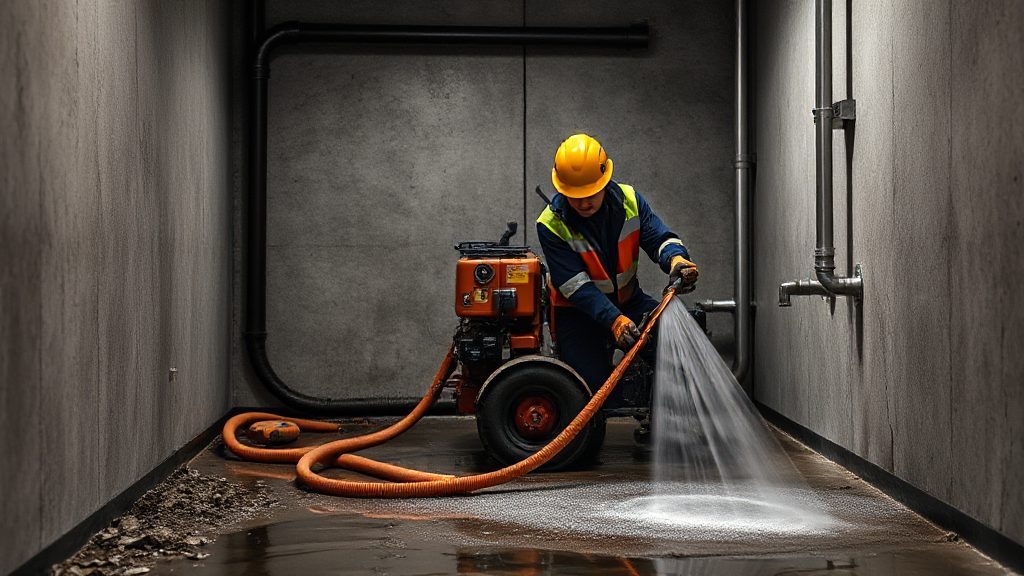
Not every clog responds to the same equipment. A drain snake or auger works for soft blockages and short runs. Hydro jetting uses high-pressure water to scour the pipe walls, which is more effective for grease, scale, and roots, and it also cleans the line rather than just piercing it. For septic tanks and grease traps, pumping and cleaning are separate services from drain clearing.
The method should match the material of the pipe as well. Older clay or cast-iron lines can be damaged by aggressive jetting, while modern PVC tolerates it well. A technician who asks about the building’s age and previous repairs is doing the job properly.
Cleanup and verification
The job is not finished when the water drains. A proper service includes flushing the line, checking that all affected fixtures flow freely, and cleaning the work area. Ask for a brief explanation of what was found. If the cause was grease, the fix is behavioral as much as mechanical. If it was roots, you may need a follow-up or a lining repair.
Verification matters most in condos, where one stack serves many units. A technician who tests only the unit that called may leave a shared line still partially blocked.
Preventive maintenance for buildings and homes
Recurring clogs are cheaper to prevent than to fix. For homes, that means avoiding grease down the sink, using drain screens, and flushing lines periodically. For buildings, it means scheduled hydro jetting of main lines and inspection of grease traps in commercial units. A maintenance contract is not glamorous, but it turns unpredictable emergencies into planned expenses.
Septic tank owners should also schedule pumping based on usage, not on crisis. A full tank backs up into the house and can damage the drain field, which is a far larger repair than a pump-out.
How to judge price, urgency, and trust before you commit
The hardest part of choosing a drain service is that you are often deciding under pressure. A few checks make that decision safer without slowing it down.
What a fair quote includes
A fair quote names the call-out fee, the method, and whether inspection is included. It should also state what happens if the first method fails. Some companies charge per attempt, which can turn a simple clog into a surprise bill. Ask whether the price is fixed for the job or billed by time and equipment.
Get the total in writing before work begins. That single habit prevents most billing disputes. If a company refuses to put a number in writing, that is a signal to call someone else.
Signs you are dealing with a reliable team
- They answer the phone and give an arrival window.
- They ask about the building, the affected fixtures, and previous problems.
- They inspect before quoting a final price.
- They explain the method and why it fits the clog.
- They clean up and confirm the drain flows before leaving.
Reliability is less about a fancy truck and more about communication. A team that tells you what it is doing and why is easier to trust than one that works silently and hands you a bill.
When to escalate instead of retrying
If a drain clogs again within days, the cause was not removed. Retrying the same fix wastes money. At that point, insist on a camera inspection and a plan that addresses the cause, whether that is root intrusion, a bellied pipe, or a failing septic system.
Also escalate when sewage backs up into multiple fixtures, when there is a strong odor indoors, or when water appears in areas with no drain. Those are signs of a main-line or system-level problem, and they need professional equipment, not a plunger.
Emergency vs. scheduled: a quick decision rule
If water is rising, sewage is present, or the problem affects a business that cannot operate, call emergency. If the drain is slow but stable and you can wait a day or two, schedule a visit and ask for inspection. If the clog is new and confined to one fixture, a DIY attempt is acceptable, but stop if it does not clear quickly.
This rule keeps you from overpaying for speed you do not need and from underpaying for a problem that will get worse. The goal is not the cheapest call, it is the right call the first time.
Frequently asked questions about drain services in Jundiaí
How quickly can an emergency drain service arrive?
Response time depends on the company and the time of day. A 24-hour team should give you an arrival window when you call. If they cannot estimate, ask for a range and confirm whether the call-out fee changes after hours.
Is hydro jetting safe for older pipes?
It can be, but pressure and nozzle choice must match the pipe material and condition. A technician should inspect the line first, especially in older buildings with clay or cast-iron pipes. Aggressive jetting without inspection can damage weak sections.
Why does the same drain keep clogging?
Recurring clogs usually mean the cause was not removed. Common reasons include grease buildup, tree roots entering a joint, scale narrowing the pipe, or a sagging section that traps debris. A camera inspection identifies which one applies.
Can I use a chemical drain cleaner before calling a professional?
Chemical cleaners can help with minor organic clogs but may damage older pipes and are hazardous to technicians who work on the line afterward. If you use one, tell the service when you call. For main-line or sewage backups, skip chemicals and call a professional.
Do I need a different service for a septic tank?
Yes. Septic tank pumping and cleaning are separate from drain clearing. A drain service can clear the line between the house and the tank, but the tank itself needs pumping based on usage and inspection of the drain field.